Our Mission
The Britt lab is investigating structure and function of biologically significant enzymes with redox-active transition metal centers, clusters or organic radicals in their active site. We have focused these efforts on enzymes important in bioenergy such as the oxygen-evolving photosystem II and the H2-forming [FeFe] hydrogenase as well as the diverse and growing family of radical SAM enzymes that employ an adenosyl radical to initiate a wide range of chemical transformations.
Our primary research tool is advanced electron paramagnetic resonance (EPR) spectroscopy. We operate the CalEPR center, home to six continuous-wave and pulse EPR instruments ranging in frequency from 9 to 263 GHz. CalEPR is the largest center of its kind on the West coast.
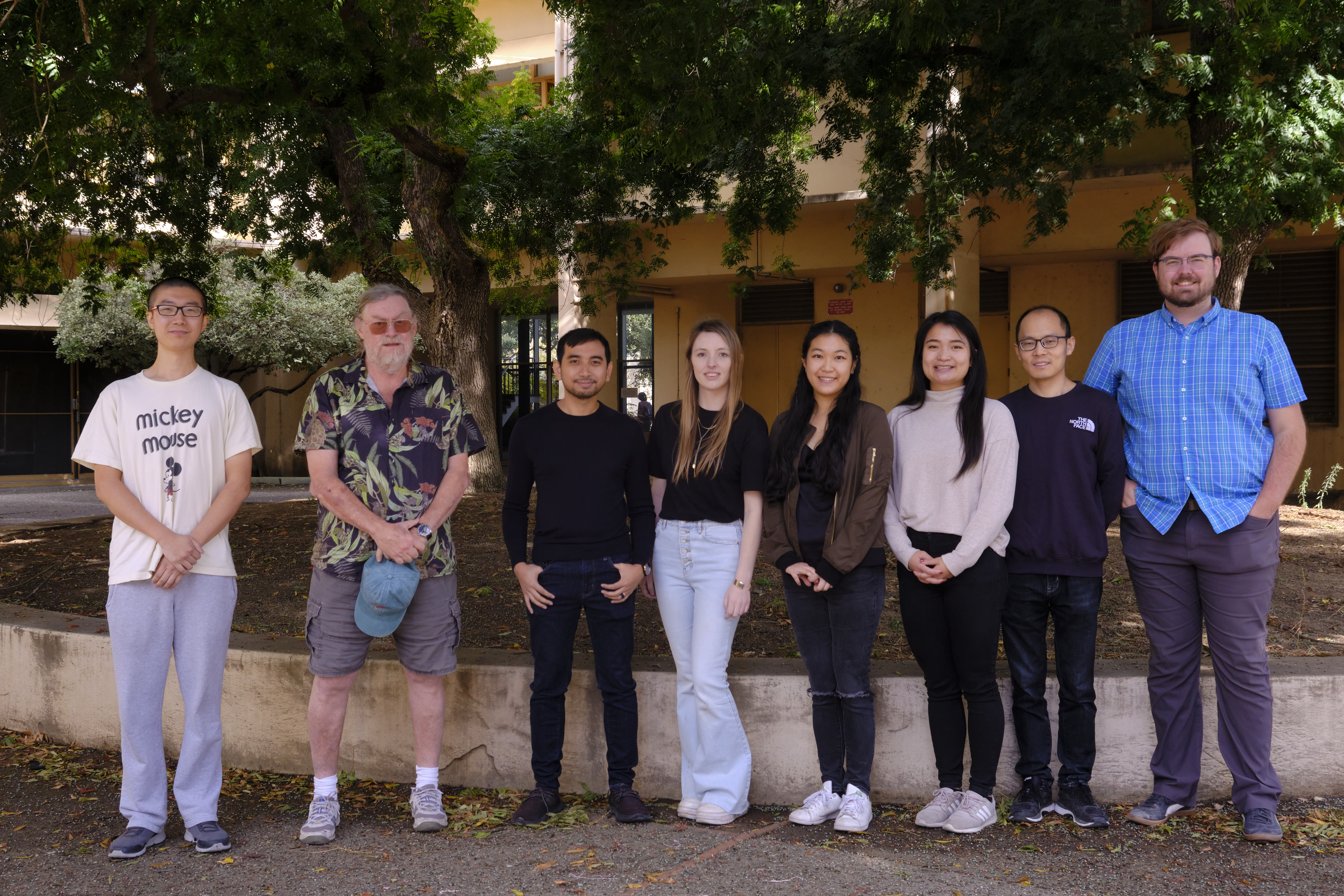
The Group